Department of Mathematics,
University of California San Diego
****************************
Math 211A: Algebra Seminar
Benjamin Baily
University of Michigan, Ann Arbor
Classifying extremal pairs in equal characteristic
Abstract:
Let R be a polynomial ring, J ⊆ R an ideal, and m a maximal ideal containing J. We consider invariants of the pair (R, J) which measure the singularities of the embedding Spec(R/J) ⊆ Spec(R) at m: the log canonical threshold (lct) in characteristic zero and the F-pure threshold (fpt) in positive characteristic. A smaller value of the lct/fpt means that the embedding is "more singular;" we seek to classify pairs which are as singular as possible.
In 1972, Skoda showed that lct_m(R, J) >= 1/ord_m(J), where ord_m denotes the order of vanishing at m. Skoda's bound has been generalized and refined many times since; among these improvements is a 2014 result by Demailly and Pham using mixed multiplicities of J and m. We extend Demailly and Pham's lower bound to positive characteristic and study the pairs (R, J) for which lct_m(R, J) (or fpt_m(R, J)) equals the lower bound. We classify these "extremal pairs" in the standard graded case, the codimension 1 case, and the dimension 2 case, confirming special cases of a conjecture by Bivià-Ausina.
-
APM 7321
APM 7321
****************************
Department of Mathematics,
University of California San Diego
****************************
Math 248: Real Analysis Seminar
Igor Kukavica
USC
Exact boundary controllability for the ideal magneto-hydrodynamic equations
Abstract:
We consider the three-dimensional ideal MHD system on a domain in with a controllable part of the boundary where we prescribe the boundary data. The basic question of boundary controllability is whether, given two states, one can by means of the control on the boundary drive one state to another. We will review the existing literature on this problem and provide a positive result for domains with only Sobolev regularity. The results are based on works with Matthew Novack, Wojciech Ozanski, and Vlad Vicol.
-
****************************
Department of Mathematics,
University of California San Diego
****************************
Math 243: Functional Analysis Seminar
Hui Tan
UCLA
Structure and non-isomorphisms of q-Araki-Woods factors
Abstract:
Hiai’s construction of q-Araki-Woods factors generalizes both Shlyakhtenko’s free Araki-Woods factors and Bozejko-Speicher’s q-Gaussian algebras. I will discuss joint work with Changying Ding where we show the q -Araki-Woods factors are strongly solid if the associated representation U is almost periodic, and the non-isomorphism between q-Araki-Woods factors and free Araki-Woods factors for certain classes of representations, contrasting the case for q-Gaussians.
-
APM 6402
APM 6402
****************************
Department of Mathematics,
University of California San Diego
****************************
Math 278C: Optimization and Data Science
Prof. Yang Liu
Lawrence Berkeley Lab
New Matrix Completion Algorithms for Highly Oscillatory Operators in Seismic and Tomographic Applications
Abstract:
Low-rank representation-based matrix or tensor completion algorithms have been developed over the past two decades for various scientific and data-science applications. Given an incomplete data matrix/tensor with missing or noisy entries but certain underlying algebraic structures, completion algorithms rely on optimization techniques to recover the full data matrix/tensor directly in a compressed representation. In the past, various compression formats have been considered such as low-rank matrix format, and Tucker, CP or tensor-train-based tensor formats. Moreover, different optimization algorithms have been exploited including alternating least squares (ALS), alternating direction filtering (ADF), nuclear norm-based optimization, Riemannian optimization and adaptive moment estimation (ADAM). Despite the success of these completion algorithms, they become less effective when dealing with highly oscillatory operators, rising from e.g., large-scale seismic or tomographic applications where physical or cost constraints limit the amount of data acquisition. This is largely due to the incapability of the abovementioned compression formats for representing non-smooth operators. Therefore, a more effective completion algorithm is called for, as the successful completion of the data matrix can significantly improve the quality of downstream algorithm pipelines for these inverse or imaging problems.
In this talk, I will present our recent work on new completion algorithms for highly oscillatory operators (arXiv:2510.17734). In a nutshell, we consider a different compression format called butterfly for the incomplete data matrix. Butterfly formats have been proven highly effective for compressing highly oscillatory operators such as Green’s functions for high-frequency wave equations, Fourier integral operators and special function transforms, but haven’t been investigated in the matrix completion context. Our work relies on a tensor reformulation of the butterfly format into a tensor network, and we consider a variety of optimization algorithms including ALS, ADF and ADAM. Numerical results demonstrate that our butterfly completion algorithms can efficiently recover a n×n matrix representing Green’s functions or Radon transforms with only O(nlogn) observed entries in O(nlogn) operation counts. I will also discuss about the limitation and future work regarding our proposed algorithm.
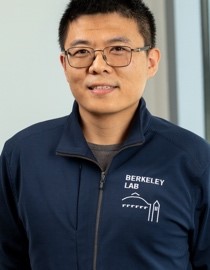
Biography: Yang Liu is a staff scientist in the Scalable Solvers Group of the Applied Mathematics and Computational Research Division at the Lawrence Berkeley National Laboratory, in Berkeley, California. Dr. Liu received the Ph.D. degree in electrical engineering from the University of Michigan in 2015. From 2015 to 2017, he worked as a postdoctoral fellow at the Radiation Laboratory, University of Michigan. From 2017 to 2019, he worked as a postdoctoral fellow at the Lawrence Berkeley National Laboratory. His main research interest is in numerical linear and multi-linear algebras, computational electromagnetics and plasma, scalable machine learning algorithms, and high performance scientific computing. Dr. Liu is the lead developer of the linear solver package ButterflyPACK and autotuning package GPTune, and is a core developer for linear solver packages SuperLU_DIST and STRUMPACK. Dr. Liu is the recipient and co-recipient of the ACES Early Career Award 2025, PDSEC Best Paper Award 2025, AT-AP RASC Young Scientists Award 2022, the APS Sergei A. Schelkunoff Transactions Prize 2018, FEM first place student paper award, 2014, and the ACES second place student paper award, 2012.
-
APM 5829 & Zoom (Meeting ID: 926 5846 1639 / Password: 278CWN26)
APM 5829 & Zoom (Meeting ID: 926 5846 1639 / Password: 278CWN26)
****************************
Department of Mathematics,
University of California San Diego
****************************
Math 296: Graduate Student Colloquium
Dr. Vishal Patil
UCSD
Topological Dynamics of Knots and Tangles
Abstract:
Topology and geometry play fundamental roles in controlling the dynamics of biological and physical systems, from chromosomal DNA and biofilms to cilia carpets and worm collectives. How topological rules give rise to adaptive, self-optimizing dynamics in soft and living matter remains poorly understood. Here we investigate the interplay between topology, geometry and mechanics in knotted and tangled matter. We first examine the adaptive topological dynamics exhibited by California blackworms, which form disordered living tangles in minutes but can rapidly untangle in milliseconds. By combining link-based tangling metrics with stochastic trajectory equations, we explain how the dynamics of individual active filaments controls their emergent topological state. Building on this framework, we then investigate tangled structures with local alignment. We demonstrate how the algebra of braids governs the mechanics and stability of braided filamentous networks in a range of biological systems. By identifying how topology and adaptivity produce stable yet responsive structures, these results have applications in understanding broad classes of adaptive living systems.
-
APM 6402
APM 6402
****************************
Department of Mathematics,
University of California San Diego
****************************
2026 Ronald K Getoor Distinguished Lecture
Scott Sheffield
MIT
Yang-Mills and the surprising implications of 1+1=2 and 2+2=4
Abstract:
In 2000, the Clay Institute offered one million dollars for a mathematical construction of 4D Yang-Mills gauge theory. That problem remains unsolved, but there has been spectacular progress in recent years on many related 2D and 4D problems.
It all starts with 1+1=2. The fact that 1+1=2 implies that two non-parallel lines in the plane (co-dimension 1) meet at a point (co-dimension 2). Less trivially, any two paths through a square (one top to bottom, one left to right) intersect somewhere. Similarly, 2+2=4 implies that two fully-non-parallel 2D planes in 4D meet at a point (interpret one dimension as time and imagine moving lines in 3D colliding like light sabers) and that knotted loops in 3D cannot be disentangled without tearing rope.
Further implications include the self-duality of 1-forms (in 2D) and 2-forms (in 4D), the conformal invariance of special Gaussian fields in 2D and 4D, and the self-duality of cellular spanning trees, along with other fundamental results about random curves and surfaces, spin systems and connections. How will this help with our remaining open problems?
-
APM 6402
APM 6402
****************************
Department of Mathematics,
University of California San Diego
****************************
Math 208: Seminar in Algebraic Geometry
Dr. Nathan Chen
Harvard University
Characterizing algebraic varieties through symmetries
Abstract:
The goal of this talk is to explore what symmetries can say about an object. We will then focus on the case of algebraic varieties, where the symmetries are birational self-maps. This is joint work with L. Esser, A. Regeta, C. Urech, and I. van Santen.
-
APM 7321
APM 7321
****************************
